Monday, January 12, 2015

Exploring birding at Tontonyane Sewerage Works diggings

The spotting of the Greater Painted-snipe on the 7th January 2015 at Tontonyane near the Sewerage Works prompted me to explore the area further. The place is 7km to the West of Mahikeng bordering Motsoseng Village.
Accompanied by young local birdwatchers we went through the length and breadth of this desolated area. Only some few fishermen were the only people passing by on their way to the nearby Modimola Dam.
By midday we had already spotted fifty six (56) bird species and the numbers were still rising.  This is only a small fraction of Pentad 2550-2520, mind you.
The area is gradually becoming a dumping site; these  un-rehabilitated borrow pits, have transformed the area into a palette of water ponds after the good rains. The nearby sewerage works plant provides most of the water into the area.
The following are photos taken from the area showing the rich diversity of bird species (a comprehensive report list is provided at the end):

Cape Long-claw

Scaly-feathered Finch

Abdim Stock (non breeding intra African migrant)

African Spoonbill

Kalahari Scrub Robin

Little Egret

Northern Black Korhaan

Red-billed Quelea (a menace to neighbouring Motsoseng)

Wood Sandpiper (non breeding Palearctic migrant)

Yellow-billed Stock (regarded as near-threatened)

Glossy Ibis

Great Crested Grebe

Female Greater Painted-snipe

Pied Kingfisher


 The expedition crew (Letlhogonolo, Mpho and Lungela)

The view of the area at a glance


The location in the map

       List of birds: 
1.      Chestnut Vented Titbabbler
2.      Scaly-throated Finch
3.      Black Chested Prinia
4.      Laughing Dove
5.      Red-billed Quelea
6.      Cape Sparrow
7.      Rock Kestrel
8.      Abdim Stock
9.      White-backed Mousebird
10.   Glossy Starlin
11.   Diderick Cuckoo
12.   Northern Black Korhaan
13.   Blacksmith Lapwing
14.   White-breated Sparrow Weaver
15.   Crowned Plover
16.   Little Egret
17.   Black Winged Stilt
18.   Zitting Cisticola
19.   African Pipit
20.   Great Crested Grebe
21.   Rattling Cisticola
22.   Cape Wagtail
23.   Kitzlig Plover
24.   African Sacred Ibis
25.   Egyptian Goose
26.   Curlew Sandpiper
27.   Red-knobbed Coot
28.   Common Sandpiper
29.   Cape Longclaw
30.   Little Grebe
31.   African Spoonbill
32.   Ruffous Napped Lark
33.   African Black Duck
34.   Spiked-heeled Lark
35.   Red-billed Teal
36.   Little Egret
37.   Three-banded Plover
38.   Glossy Ibis
39.   Hadeda Ibis
40.   Grey Heron
41.   Wood Sandpiper
42.   Yellow-billed Stock
43.   South African Cliff Swallow
44.   Reed Cormorant
45.   White-faced Duck
46.   Amethyst Sunbird
47.   Black-throated Canary
48.   Southern-masked Weaver
49.   African Hoepoe
50.   Pied Kingfisher
51.   Familiar Chat
52.   Golden Finch
53.   Yellow-billed Duck
54.   Common Fiscal
55.   Pin-tailed Whydah
56.   Grey Headed Gull
57.  Greater Painted-snipe


Thursday, January 8, 2015

Greater Painted Snipe at Totonnyane Sewerage Works diggings

It was after several attempts to get the picture of this  pair of shy and skulking Greater Painted Snipes; that I thought I had run out of luck. 
A glimpse of these beautiful birds had me coming again and again to the very same spot. The good rains had created several water ponds in the area.
Initially I spotted them through my binoculars and thereafter could not see them out in the open again. 
Today my patience paid out.

 Female Greater Painted Snipe
 Female and Male Greater Painted Snipe (the pair)
Map showing the location of the Sewerage Works diggings

Birdlife South Africa Owl Awards


Mpho Phiri and Mark Anderson (CEO of Birdlife South Africa)
 
At a glittering occasion held on the 23rd August 2014, at Misty Hills Country Hotel in Gauteng Province, I was humbled by being one of the recipients of the prestigious BLSA Owl Award. This was for the contribution to Birding and Citizen Science as well  supporting Birdlife objectives.


Tuesday, July 29, 2014

Endeavour to protect the Short-clawed Lark area


"Spotty" the Short-clawed Lark
After regular visits to the spot ( 40km West of Mahikeng in a village called Dibono) where Short-clawed Larks never fail to show up; I ultimately fell in love with a particular individual whom I later nicknamed "Spotty". Now, it was time to make sure that the area was secured and protected.
Having spent the last three years trying to convince the local villagers not to temper with this particular spot; the local headman agreed with me that I put up some warning signs in the area. In addition to that he stressed that I should get the local Chief's blessing.
In desperation I managed to save some few Rands and purchased some signs.
Now that the signs have been delivered; my next step is to go and see the local chief for  his blessings and erection.

Sunday, September 8, 2013

Eurasian Curlew at Barberspan Bird Sanctuary

The season for the arrival of migrants is here and one of the first to be spotted at Barberspan Bird Sanctuary was the Eurasian Curlew; a nonbreeding Palearctic migrant. The largest wader in South Africa.  Uncommon and found along the coastal regions but rarely inland.
The bird was firstly spotted on 27th August 2013  by birders and disappeared thereafter. On the 1st September 2013 it was again spotted at  Leeuwpan, a dam adjacent to Barberspan Dam. Later during the week; it was again spotted on the 4th September 2013 by rangers in the park.
After failed attempts to spot the bird on the above stated dates; I was back again at Barberspan on the 7th September 2013 for my final attempt. This time I was lucky.

Curlew walking about in mud along the shore of the dam


Curlew running before take-off


Curlew running with flapping wings before take-off 

Curlew probing deeply in the mud with its very long decurved bill 
 
Blacksmith Lapwing mobbing the Curlew


Tuesday, May 28, 2013

Short Clawed Lark: "Spotty" revisited

My posting on the Short Clawed Lark (Mirafra chuana) on the 15th October 2011 was on a particular individual I dubbed "Spotty". You can follow this link for that report:
I have been monitoring the bird since then and I am happy to report that it is still in the same spot.
Although, there is another pair in the area; its call is still prevalent, displaying in fluttering flight  low over grass, clapping wings and taking refuge at the top of the bushes. In Setswana (Chuana the local people and language) the bird is called Mantsiditsidi.
Lets take cognisant of the fact that the bird is near threatened.
Spotty on 25th May 2013 (calling at the top of the bush)

The unmistakable black spot underneath

 The charming acrobatic display


Sunday, May 12, 2013

Dedicated to the " World Migratory Birds Day 2013"

The  World Migratory Birds Day 2013 this weekend (11th to the 12th May 2013, calls for everyone to  pay attention to the plight of migratory birds all around the world with the theme:
“Networking for migratory birds".
I would love to dedicate this post to this call with  photos of birds on the wing.
Stop-over habitats for the migratory birds are deminishing at an alarming rate due to global warming and other social aspects.

You can visit  http://www.worldmigratorybirdday.org for more.

 Flight of the Blackwinged Stilts (circling a drying dam)
Lesser Flamingos on the wing to another feeding area
Egyptian Goose crashlanding on arrival   on better part of a drying dam
South African Shelduck arriving to a dry dam
White-breasted Cormorant flying low over water (breeding season)
Egyptian Goose off to another feeding area
Pied Avocet on a reconaisance

Thursday, April 25, 2013

Flamingos at Modimola Dam

Recently, I have been fascinated by the congregation of Lesser Flamingos at Modimola Dam; 12km  West of Mahikeng in the North West Province.
Both Lesser and Greater are gathering in numbers there. Here are some of the photos I took recently. An enjoyable spectacle of nature while the drought is at its peak in the area.
We hope they will be here to stay.
 
Location of Modimola Dam 
 
Walking and darting across the dam
 
Filtering food from surface of  water with bill upside down
 
From juvenile to adult hood phases all present
 
Taking a rest in the companion of Black-winged Stilt


Monday, April 8, 2013

Latest visitors to my garden

Familiar Chat just finished flicking its wings
 
While migrants were preparing to leave for the Northern Hemisphere; I had this visitor to my garden for the very first time. Oh! amazing to see how it flicks its wing every time it lands.

Hoping on my garden wall and flicking its wings
 
 
Yellow Canary starring at the sun on my sand patch
 

 Another new visitor as well caught on my sand patching with its beak held high as if howling at some one.
 
Enough of the sun and lift off

Thursday, January 24, 2013

Lesser Flamingos increase two fold at Modimola Dam

After a restful holiday; I went birding on Friday, the 4th January 2013 to Modimola Dam. 
Following my last report on the Lesser Flamingos (26th October 2012), I was surprised to find the numbers increased. The last group of holiday makers around the dam did not bother them a bit.

The colourful Lesser Flamingos

Cooling off in the sweltering heat
 

Saturday, December 29, 2012

In search of the African Pitta: Northern Zimbabwe

The long road to Masoka 

After  recieving an E-mail from my friend Tony Archer, I was excited and on the other hand left breathless.
All what Tony was saying was that he was off to Zimbabwe with some birders to look for the  African Pitta.
Further down,  as I read the mail ; he was simply saying to me " Mpho, I want you to come on this trip".
So, I had to make a decision fast, that is very fast.

We left for Zimbabwe on the 8th December 2012, with a stop over at Louise Trichardt; so as to hit the border gate at Beit Bridge as early as possible on the 9th December 2012  and proceed to Harare.

Waking up in Harare on the 10th December 2012, gave us ample time to do some birding around the city. Well, with the assistance  of Ian, the local bird guide, we managed to spot some specials.

 
Yellow-mantle widowbird around Harare
 

After agood night rest at Harare, we were up early again on the 11th December 2012, heading towards the Zambesi Valley. A small village called Masoka was our destination.  A local bird guide by the name of Mackenzie was awaiting us to track down the Pitta.

The breath taking view of the Zambezi Valley

It was almost dark when we arrived at Masoka and  we set up camp at Masoka Wild Camp site along the Angwa River.

The Mighty Angwa River
 
Locals fetching water from the mighty Angwa River  

After a good night rest, the morning of the 12th December 2012, was overcast but the search for the African Pitta  had  to start in earnest as early as possible.

Base camp at Masoka Wild Camp site
 
Elephants passing by close to the camp site
 
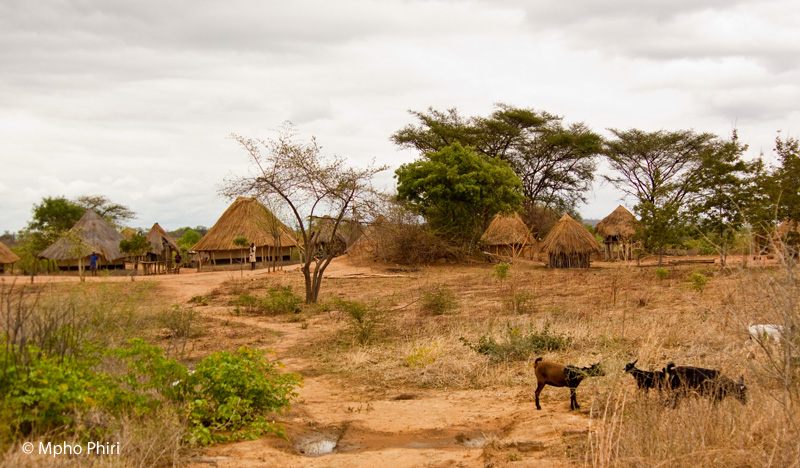
Homesteads around Masoka


The road to the Pitta habitat

On arrival at the Pitta habitat, we learned from Mackenzie that he had searched the previouse day (for the bird) with no luck. So, the search continued.

It was about 10h00 when Mackenzie whispered in great excitement "There it is"; pointing at the Pitta. "Wow, what a beauty", I said to myself.

The African Pitta (the best I could get)

All cameras and binoculars were out to catch a glimpse of the bird but it was illusive hiding in the lower branches of the  thick forest. Later on the Pitta thought it was enough and disappeared into the forest. We called it a day and decided to come the next for a better shot.

Spotted Creeper showing in the area


On the 13th December 2012, after some birding around Masoka, we gave the Pitta a second try. We were back at the Pitta spot  again awaiting its appearance when a troup of elephants appeared and made us run for our dear lives. At least we gave it a second try. I will be back again soon.

The local church structure
 
The market place (well stocked)
 
The Pitta Crew ( left to right Dawie and Sarieta, Mackenzie, myself and the Zimbabwe Anti Poaching Unit Scout). The photo was taken by Tony Archer.